
Long Yan Rou & Yuan Zhi
The Spirit-Settling Pair in Chinese Medicine
There is a particular kind of insomnia that doesn’t come from caffeine or poor sleep hygiene.
It comes from rumination: unfinished conversations from earlier in the day replayed at 2:13am, grief from years ago that was never properly metabolized, a heart that feels both tired and overstimulated at the same time!
In Traditional Chinese Medicine (TCM), this isn’t simply “anxiety.” It is often a disturbance of the Heart and Shen (spirit).
Two classical herbs—Long Yan Rou (龙眼肉) and Yuan Zhi (远志)—have been paired for centuries to address exactly this pattern.
Here’s why.
Long Yan Rou (龙眼肉) – “Dragon Eye Fruit”
Botanical: Dimocarpus longan
The Folklore
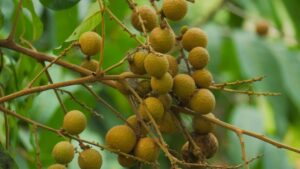
The longan fruit is called “Dragon’s Eye” because when peeled, the translucent flesh surrounds a dark pit that resembles a pupil. In Chinese symbolism, the dragon represents vitality, authority, and celestial protection. The fruit was believed to restore vitality and brighten the eyes and spirit.
In imperial China, longan was considered a tribute fruit—reserved for royalty because it was thought to replenish fatigue from overwork and emotional strain.
There is poetry written about it being the fruit of scholars who studied too late into the night.
Clinical Actions in Mental Health
In TCM, Long Yan Rou:
- Tonifies Heart Blood
- Strengthens the Spleen
- Nourishes the Shen
- Calms palpitations
- Improves insomnia due to deficiency
- Supports memory and concentration
Pattern It Treats
This herb is particularly useful when insomnia is caused by:
- Blood deficiency
- Emotional depletion
- Chronic overthinking
- Post-illness exhaustion
- Postpartum depletion
- Trauma recovery fatigue
The person often says: “I’m exhausted but I can’t settle.”
This is not hyper-adrenal anxiety. This is a nourishment problem.
From a biomedical lens, we might correlate this with:
- Chronic stress depleting neurotransmitter precursors
- HPA axis dysregulation
- Low iron or poor circulation affecting cognition
- Burnout states with poor restorative sleep
Long Yan Rou doesn’t sedate. It rebuilds.
Yuan Zhi (远志) – “Far-Reaching Will”
Botanical: Polygala tenuifolia
The Folklore
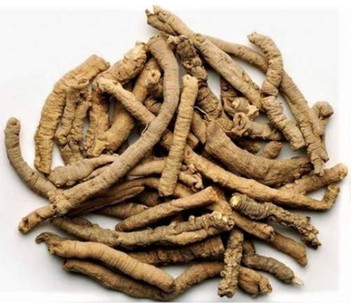
The name Yuan Zhi literally means “Far Aspiration” or “Far-Reaching Will.”
Ancient physicians believed it strengthened memory and sharpened one’s resolve. It was given to scholars preparing for the imperial examinations to “clear the mind and strengthen intent.”
In Daoist lore, it was said to “connect the Heart and Kidney”—a poetic way of describing the integration between emotion and willpower.
Clinical Actions in Mental Health
Yuan Zhi:
Calms the Shen
- Clears phlegm misting the mind
- Enhances cognition
- Reduces anxiety with rumination
- Helps insomnia with vivid dreaming
- Supports depression with emotional withdrawal
It is particularly helpful when there is:
- Anxiety with obsessive thoughts
- Trauma with intrusive memory
- Brain fog with emotional stagnation
- Sleep disturbance with excessive dreaming
The Pattern
When the Heart and Kidney are not communicating, we see:
- Restlessness
- Fear + insomnia
- Palpitations
- Difficulty integrating emotional experience
From a modern neurobiological perspective, Yuan Zhi has been studied for:
- Neuroprotective effects
- Modulation of inflammatory cytokines
- Possible enhancement of acetylcholine activity
- Support for cognitive function
Some research suggests Polygala species may influence neuroplasticity pathways, which makes its historical use in trauma and memory disturbance fascinating.
The Classical Pairing: Nourish + Clear
Long Yan Rou nourishes the Heart. Yuan Zhi opens and connects it. One builds the house. The other turns the lights on.
Together, they are often found in formulas addressing:
- Insomnia with deficiency
- Anxiety with palpitations
- Depression with cognitive dullness
- PTSD-like rumination
- Grief-based depletion
(Always under supervision of a trained herbalist, especially if someone is taking medications.)
Bridging East & West: Inflammation, Sleep, and Shen
When we look at chronic stress through a biomedical lens, we see:
- Increased inflammatory cytokines
- Altered serotonin and dopamine signaling
- Fragmented REM sleep
- HPA axis disruption
When we look at it through TCM:
- Heart Blood deficiency
- Phlegm misting the mind
- Shen disturbance
- Heart-Kidney disconnection
Different language, same human experience.
Long Yan Rou addresses depletion. Yuan Zhi addresses disconnection.
In integrative settings, especially where trauma and chronic stress are involved, this herbal pair may complement:
- Somatic therapies
- Breathwork
- Acupuncture (HT7, PC6, KD6, Anmian)
- Sleep restoration protocols
Safety & Considerations
These herbs are generally considered safe when prescribed appropriately. However:
- They should not be self-prescribed alongside antidepressants without practitioner oversight.
- Yuan Zhi can be stimulating in excess.
- Long Yan Rou is warm and sweet—use caution in damp-heat patterns.
Herbal medicine is pattern-based. It is not symptom-based.
The Deeper Teaching
In my clinical experience, insomnia is rarely about sleep alone.
It is about:
- Unprocessed emotion
- Nervous system dysregulation
- Spiritual fragmentation
- Inflammation of the body and mind
Long Yan Rou reminds us: You must rebuild what has been depleted.
Yuan Zhi reminds us: Your spirit must reconnect to its direction.
When the Heart is nourished and the will is restored, sleep comes naturally—not because we forced it, but because we re-established harmony.
And sometimes that’s the difference between sedation… and healing.