
The Difference Between Stress & Anxiety
Stress and anxiety are often used interchangeably to describe feeling overwhelmed, tense, or emotionally exhausted. While they may feel similar on the surface, they arise from different places within us and call for different kinds of care. Understanding the distinction between stress and anxiety begins with listening more closely to what our body, mind, and soul are trying to communicate, rather than pushing through or ignoring the signals we’re being given.
What’s the Difference Between Stress & Anxiety?
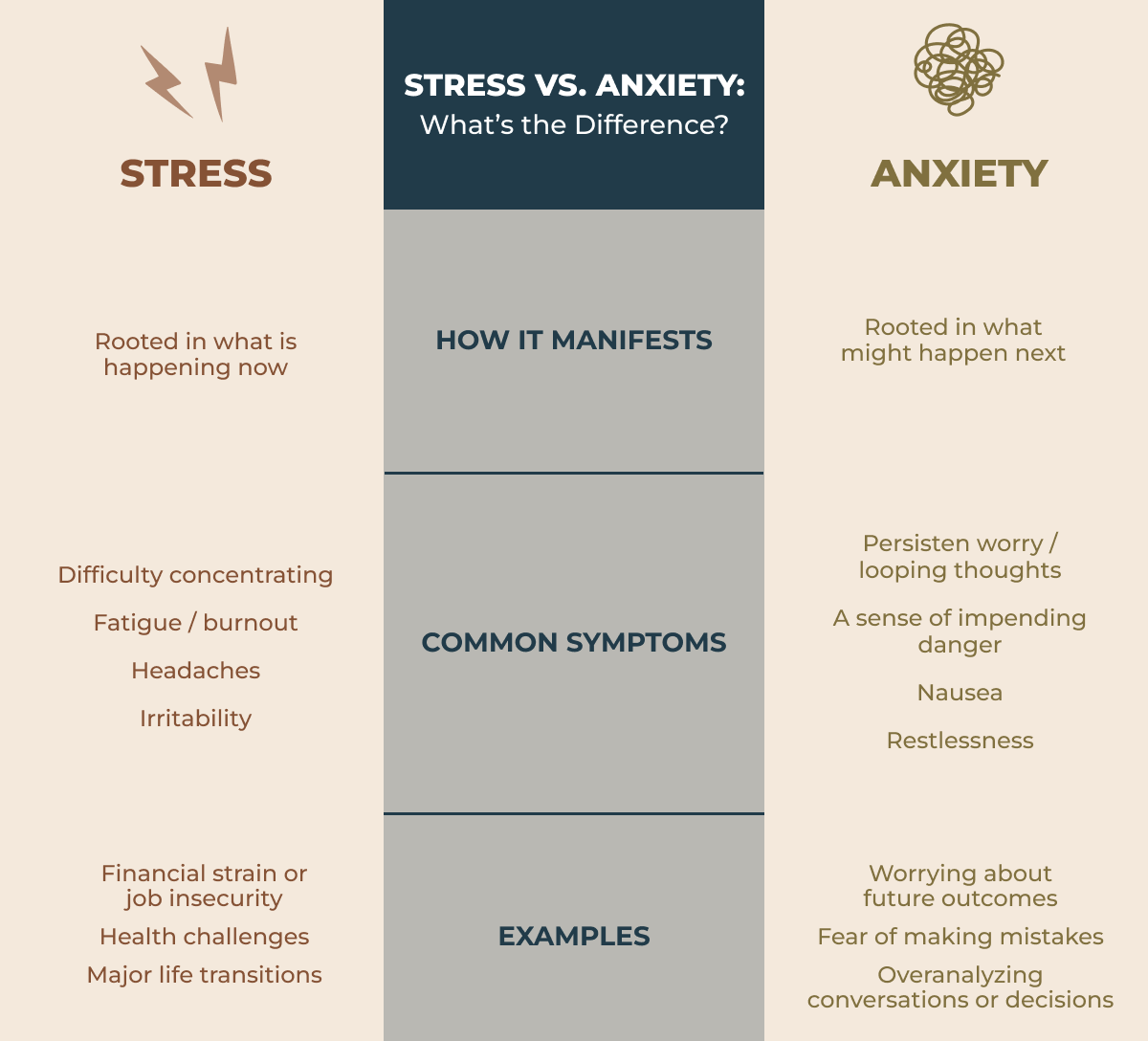
Stress is typically rooted in what is happening right now, emerging as a response to something tangible and external such as a pressure, responsibility, or challenge. Anxiety, on the other hand, lives in what might happen next. It’s often an internal experience that lingers even when there is no immediate threat.
What is Stress?
Stress is a natural biological response designed to help us adapt, respond, and survive. When we encounter pressure or challenges, our nervous system mobilizes energy so we can act. In small doses, stress can be motivating, helping us meet deadlines, solve problems, and navigate change.
The real issue arises when stress becomes chronic and the body never receives the signal that it’s safe to rest. This becomes even more pronounced in our modern world, where stressors rarely turn off. Constant notifications, packed schedules, financial pressure, and emotional responsibilities keep the nervous system activated far longer than it was ever designed to be, leaving little room for true rest or recovery.
Symptoms of Stress
Stress tends to show up first as a sense of tension, urgency, or feeling constantly “on.” It’s the body’s way of signaling that it is carrying more than it can comfortably hold.
Common symptoms of stress include:
- Tight shoulders, neck, or jaw
- Headaches or migraines
- Shallow breathing
- Fatigue or burnout
- Irritability or short temper
- Trouble sleeping or staying asleep
- Digestive discomfort
- Difficulty focusing or making decisions
When the stressor eases or is resolved, these symptoms often lessen as the body begins to settle on its own.
Examples of Stressful Situations
Stress is most often tied to something specific happening in our lives – a demand, responsibility, or circumstance that requires our attention and energy. Common examples of stressful situations include:
- Heavy workloads or unrealistic expectations
- Financial strain or job insecurity
- Caregiving responsibilities
- Relationship conflicts
- Health challenges
- Major life transitions such as moving, divorce, or a death
What is Anxiety?
Anxiety feels less tied to circumstances and more like a constant undercurrent. It’s a sustained state of alertness, worry, or fear that persists even in moments that appear calm or safe on the surface. Rather than responding to what is happening right now, anxiety often keeps the mind and body oriented toward what might happen next.
At Barn Life Recovery, we believe that at the soul level, anxiety thrives in an environment of fear and resistance. When the nervous system is repeatedly bracing for what could go wrong, it gradually loses its ability to soften, trust, and rest in the present moment. Over time, this heightened state can become familiar, shaping perception, behavior, and emotional experience in subtle but powerful ways.
Symptoms of Anxiety
Anxiety can show up in both subtle and unmistakable ways, affecting the body, mind, and sense of safety all at once. Rather than arriving only during moments of stress, these symptoms often emerge without warning and can feel difficult to explain or control.
Common symptoms of anxiety include:
- Persistent worry or looping thoughts
- A sense of impending danger
- Restlessness or inability to relax
- Rapid heartbeat or shortness of breath
- Chest tightness or nausea
- Difficulty sleeping despite exhaustion
- Avoidance of situations that feel overwhelming
- Feeling disconnected from calm or joy
Unlike stress, anxiety doesn’t always recede when life slows down. It can follow you into moments that should feel peaceful, making rest feel elusive.
Examples of Anxiety-Inducing Situations
For many people, anxiety arises in moments that should feel neutral or even safe, making it confusing and frustrating to understand. It often pulls attention away from the present moment and toward imagined outcomes, perceived threats, or internal expectations. Common experiences include:
- Worrying about future outcomes that have not occurred
- Feeling unsafe even in familiar environments
- Fear of making mistakes or disappointing others
- Difficulty being present, even during peaceful moments
- Overanalyzing conversations or decisions
- Avoiding situations due to anticipated discomfort
Can Stress Lead to Anxiety?
Simply put, yes. In fact, chronic stress is one of the most common pathways into anxiety. When the nervous system remains activated for long periods without relief, it can become conditioned to stay on high alert. Over time, the body begins responding to everyday experiences as if they are threats. This is why early support matters. Addressing stress before it becomes chronic can prevent deeper anxiety patterns from taking root.
How Should Stress and Anxiety Be Treated?
Stress and anxiety are real, common, and treatable. Treatment is most effective when it creates safety rather than pressure, and when it supports the whole person rather than focusing on symptoms alone. At Barn Life Recovery, we approach both stress and anxiety as invitations to slow down, turn inward, and reconnect with what truly matters.
Treatment at Barn Life Recovery blends Joint Commission–certified mental health therapies with holistic and spiritual practices that help regulate the nervous system and restore balance. These include Tai Chi, medical Qi Gong, meditation, Martial Arts, yoga, acupuncture, and Chinese herbal therapy, alongside art therapy and Eastern philosophical studies that support meaning, presence, and inner clarity. Together, these practices encourage openness, receptiveness, and acceptance, allowing the body and mind to settle naturally.
If stress or anxiety leaves you feeling overwhelmed, contact us to take the next step toward a more grounded, peaceful life.