
Beginner Meditation: A Guide to Meditative Practices
Meditation is often described as a practice of stillness, but for many beginners it can feel anything but quiet. Thoughts arise, the body fidgets, and the mind wonders if it is being done “right.” At Barn Life Recovery, we see meditation not as a performance, but as a gentle process of coming back into a relationship with yourself. Beginner meditation is not about emptying the mind; it’s about learning how to stay present with whatever is there, with curiosity, patience, and compassion.
Below, we’re sharing what meditation is, why it matters, and how to begin in a way that feels supportive rather than overwhelming.
What is Meditation?
At its core, meditation is time set aside to listen. In the beginning, it’s an intentional act of turning toward the soft, still voice within (the one that often gets drowned out by distraction, noise, and urgency!) Meditation is an act of honesty and a quiet revolt against constant stimulation and delusion.
Rather than forcing the mind into silence, meditation teaches us how to observe our thoughts without being controlled by them. Over time, this practice expands beyond formal sessions. As awareness grows, meditation becomes less about setting time aside and more about cultivating a continuous sense of presence, a quality of nowness that begins to inform how we move through daily life.
Benefits of Meditation
Meditation offers profound benefits for mental health, emotional balance, and brain function. At a neurological level, regular meditation helps retrain the brain by strengthening pathways related to focus, emotional regulation, and self awareness. It also calms overactive stress responses that contribute to anxiety and chronic tension.
For individuals experiencing anxiety, meditation provides a way to interrupt cycles of obsessive thinking and nervous system overload. With practice, the mind learns to pause rather than react, creating space between a stimulus and a response. This space is where choice, clarity, and healing begin.
Meditation also supports:
- Improved sleep
- Reduced stress
- Greater emotional resilience
- A deeper sense of inner stability
These changes do not happen all at once, but unfold gradually as the practice becomes integrated into everyday life.
Elements of Meditation
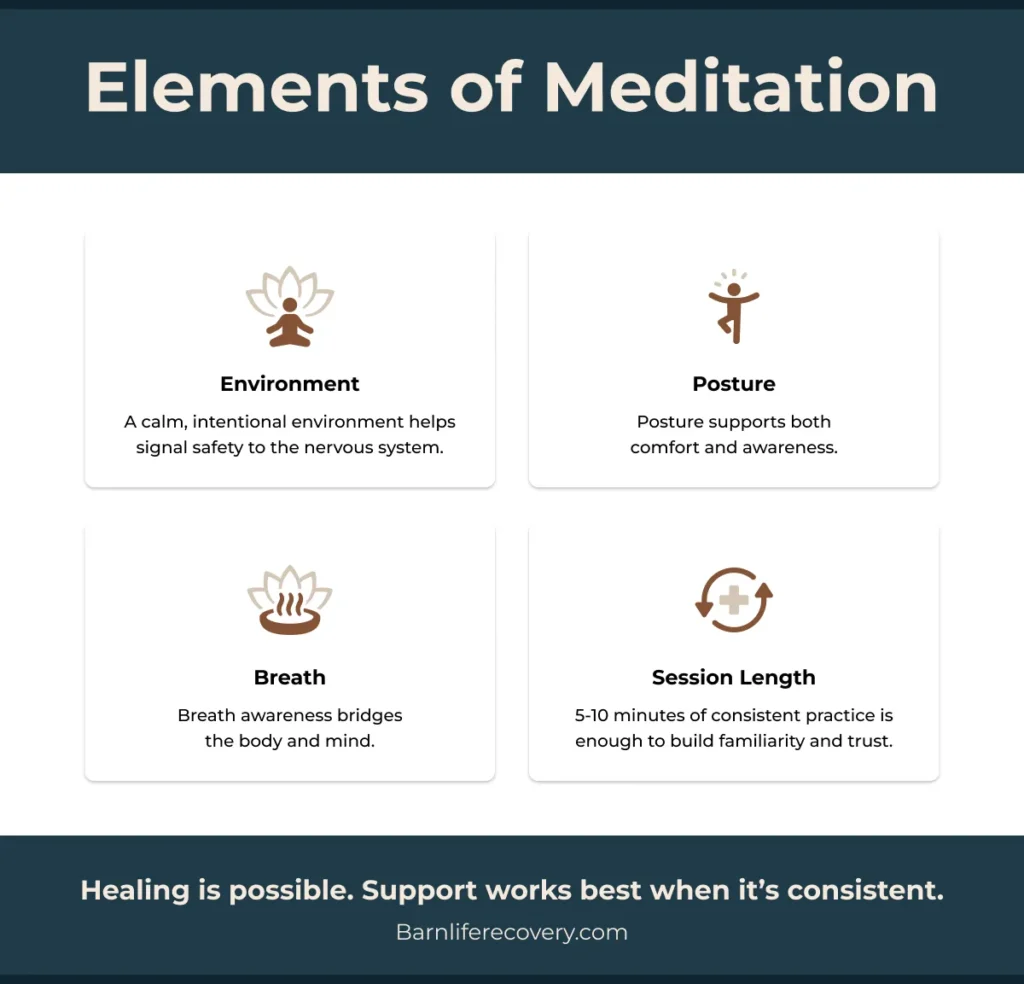
While meditation can take many forms, certain foundational elements help create a supportive and effective practice.
Environment
A calm, intentional environment helps signal safety to the nervous system. This does not require perfection or silence, only a space where you feel relatively at ease and unlikely to be interrupted. Natural light, fresh air, or simple grounding elements can help reinforce a sense of presence.
Posture
Posture supports both comfort and awareness. Whether seated upright in a chair, on a cushion, or lying down when needed, the goal is to feel supported without becoming rigid. A balanced posture allows the body to relax while the mind remains alert.
Breath
Breath awareness bridges the body and mind. Observing the breath as it naturally moves helps anchor attention and gently regulate the nervous system. There is no need to force or control breathing, only to notice it with patience.
Session Length
For beginner meditation, shorter sessions are often the most effective. Five to ten minutes of consistent practice is enough to build familiarity and trust without overwhelming your system. Over time, longer sessions may feel more natural – but consistency always matters more than duration!
How to Get Started in 5 Easy Steps
Beginning meditation does not require special tools or extensive training, only a willingness to show up honestly. To get started in establishing a meditation practice:
Choose a supportive time of day.
Select a time when you’re least likely to feel rushed or interrupted, such as early morning or before bed, so your practice feels calm rather than forced.
Create a comfortable space.
Find a quiet, comfortable place where you can sit or lie down with minimal distractions and feel at ease in your body.
Set a gentle time limit.
Set a timer for 5-10 minutes so you can relax into the practice without watching the clock or worrying about when to stop.
Bring awareness to your breath.
As you begin, notice the sensation of air moving in and out of your body, allowing your breath to anchor you in the present moment.
Return with kindness and close intentionally.
When your mind wanders, gently guide your attention back to your breath without self criticism. When the timer ends, pause to notice how you feel before transitioning back into your day.
Dive Deeper: 5 Guided Meditations for Beginners
Guided meditations can be especially helpful for beginners, offering structure and reassurance through spoken guidance. Here are five beginner friendly options you can explore on YouTube to support your practice!
Body Scan Mindfulness Meditation – A Short Guided Body Scan Meditation
4-7-8 Calm Breathing Exercise
Loving Kindness Meditation to Develop Mindfulness and Compassion
20 Minute Mindfulness Meditation for Being Present
Guided Meditation For Anxiety & Stress For Beginners
Barn Life Recovery’s Holistic Meditation Approach
If stress or anxiety has begun to feel overwhelming, you don’t have to navigate it alone! Meditation can be a powerful starting point, but lasting healing often unfolds with the right guidance and support. At Barn Life Recovery, we create space for you to slow down, reconnect, and build skills that support a more grounded, peaceful life. When you’re ready to take the next step, we invite you to contact us!