Understanding Imposter Syndrome

Imposter syndrome has a quiet way of convincing capable, caring people that they do not belong, that they are somehow fooling everyone around them, or that their success is undeserved. It’s a human response shaped by pressure, expectation, and past experiences. But with the right support, it can soften, loosen its grip, and give way to greater confidence and self-trust!
What is Imposter Syndrome?
Imposter syndrome refers to a pattern of thinking where individuals doubt their abilities and feel undeserving of their achievements, despite clear evidence of competence. Instead of internalizing success, people experiencing imposter syndrome often attribute accomplishments to luck, timing, or external factors.
Common signs and symptoms of imposter syndrome include:
- Fear of failure or being “found out”
- Overworking or people-pleasing to prove your worth
- Discounting compliments or minimizing achievements
- Feeling “lucky” rather than capable or skilled
These thoughts can be persistent and exhausting, especially when they remain unspoken.
Who Experiences Imposter Syndrome?
Imposter syndrome affects people across all ages, genders, and professions. It’s especially common among high-achieving individuals, caregivers, parents, leaders, creatives, and those stepping into new roles or responsibilities.
It can appear in many areas of life, including:
- Parenting, where you might question whether you’re doing “enough” or doing it “right”
- Your career, especially after promotions, career changes, or recognition
- Personal achievements, such as educational milestones, creative work, or your healing progress
Over time, the constant self-doubt associated with imposter syndrome can place significant strain on the nervous system. Research suggests that many people who experience imposter syndrome also struggle with anxiety or depression, as the pressure to prove worth and avoid failure becomes emotionally exhausting and difficult to sustain.
Causes of Imposter Syndrome
Imposter syndrome doesn’t exist in isolation. It’s often shaped by a combination of internal and external influences, including:
- Perfectionism, where self-worth becomes tied to flawless performance
- High expectations from oneself or others, learned early in life
- Comparison to peers, which is intensified by social media and cultural pressure
- Past experiences of criticism, rejection, or conditional approval
Over time, these influences can create an internal narrative that says worth must be earned and maintained through constant effort.
Impacts on Imposter Syndrome Relationships and Family Life
Left unaddressed, imposter syndrome can quietly strain relationships. Persistent self-doubt may lead to withdrawal, defensiveness, over-giving, or difficulty receiving care and support from others.
In family and relationship dynamics, imposter syndrome can show up as:
- Difficulty trusting love, praise, or reassurance
- Over-functioning in parenting or partnerships
- Fear of letting others down or being a burden
- Emotional distance created by internal shame or anxiety
Recognizing imposter syndrome early is the key. Awareness creates space for compassion, honesty, and healthier connection with loved ones.
Strategies to Overcome Imposter Syndrome
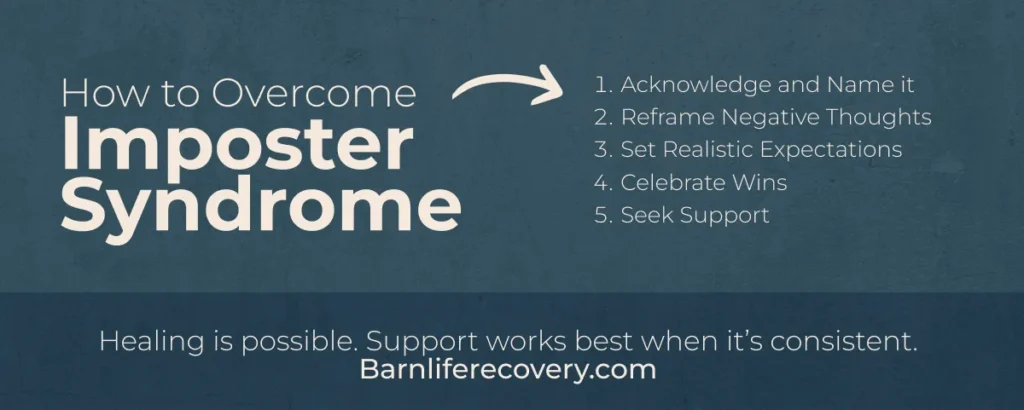
Healing from imposter syndrome is not about forcing confidence – it’s about creating safety within yourself and learning to relate differently to self-doubt.
Helpful strategies to address imposter syndrome include:
Acknowledge and Name It
Imposter syndrome thrives in silence. Understanding that this experience is common and shared can help reduce shame and isolation. When you name what is happening, you interrupt the cycle of self-criticism and create distance between who you are and the thoughts you are having.
Reframe Negative Thoughts
Gently challenge thoughts of self-doubt by grounding yourself in evidence rather than feelings. Ask what facts actually support the story you’re telling yourself. Over time, this can help loosen deeply ingrained patterns of negative self-talk.
Set Realistic Expectations
Perfectionism can fuel imposter syndrome by setting impossible standards. Learning to accept “good enough” is not lowering the bar, it’s restoring balance. Realistic expectations allow you to move forward without constant self-punishment or fear of failure.
Celebrate Wins
Imposter syndrome trains the mind to overlook success. Keeping a simple record of your achievements and growth helps retrain your awareness to notice progress. Even small wins matter, especially when rebuilding trust in yourself.
Seek Support
Talking with trusted friends, mentors, or a licensed therapist provides perspective and validation. Supportive conversations help normalize your experience and can help you develop a healthier internal narrative.
When to Seek Professional Help
If imposter syndrome begins to feel overwhelming or unmanageable, it may be time to reach out to a professional – especially if you’re feeling persistent anxiety, depression, or impact on your daily life.
Supportive mental health care can help you explore the deeper roots of imposter syndrome, regulate your nervous system, and develop healthier patterns of self-trust and self-compassion.
Contact our team at Barn Life Recovery to begin a conversation and take the next step toward clarity, confidence, and emotional balance!