
Understanding the Psychology of Fear
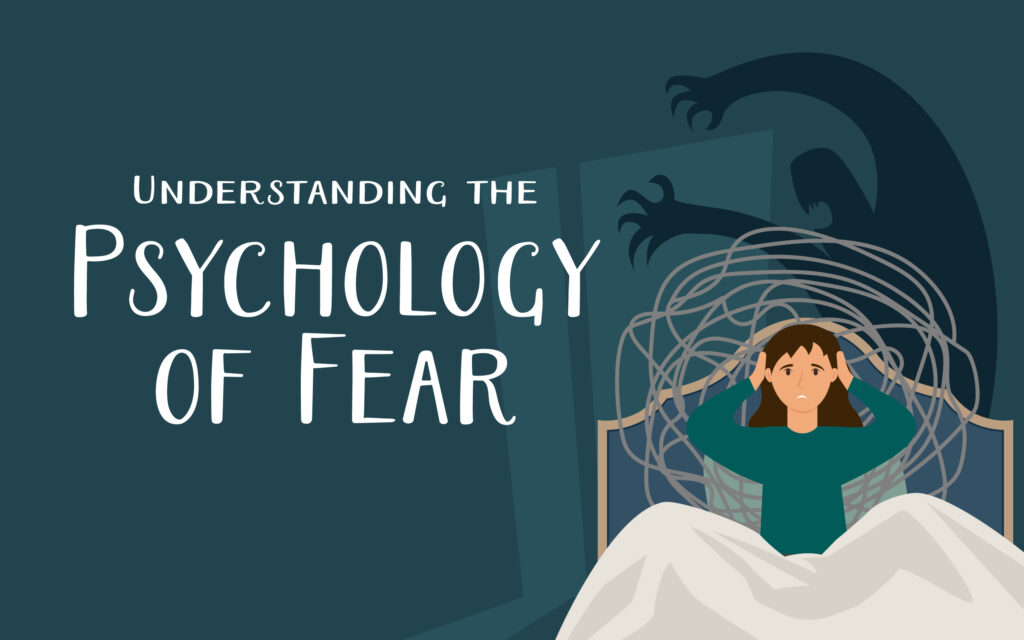
Fear is one of the most fundamental human emotions—an ancient survival instinct that has helped our ancestors avoid danger and make quick decisions in life-threatening situations. But while fear can be a lifesaver, it can also hold us back, keeping us stuck instead of pushing us forward. In this article, we’re diving into the psychology of fear—what it is, how it works, and, most importantly, how we can face it head-on and move past it!
What is Fear?
Fear is a bit like an old friend that sometimes protects us and sometimes plays tricks on us. It’s that rush we feel when something startles us in the dark, the nervous pause before we take a big risk, the little voice that wonders what might go wrong… But what exactly is fear? To truly understand it, we must look at both its biological and emotional components.
The Biochemical Response
At its core, fear is a physiological event. When the brain perceives a threat—real or imagined—it signals the release of stress hormones like adrenaline and cortisol. As the body shifts into high alert, preparing for fight, flight or freeze, we may experience blood rushing to the muscles, a spike in heart rate, and dilated pupils. This biochemical response is our primal survival mechanism, a tool passed down from ancestors who needed to react quickly to predators and dangers.
The Emotional Response
Fear isn’t just a physical reaction—it can also be an emotional rollercoaster. Sometimes it’s just a quick rush, like the thrill of a scary movie, and other times it lingers, making us hesitate before stepping outside our comfort zone. Our past experiences shape the fears we carry, influencing how we move through the world. Some fears make sense, like avoiding a speeding car, while others, like the fear of failure, can keep us stuck.
No matter the form, fear has the power to either protect us or hold us back. Because fear is often tied to past experiences, it can shape how we navigate the world.
Common Symptoms of Fear
Fear can manifest in many ways, both physically and mentally. It can sneak in as a racing heartbeat, a sense of unease, or a full-blown panic response. Here are some of the most common symptoms of fear:
- Pounding heart or rapid breathing
- Feeling lightheaded or dizzy
- Sweating or getting the chills
- Stomach issues like nausea
- Overthinking and replaying worst-case scenarios
- Avoiding certain people, places, or situations
- Tight muscles or shaky hands
Is it Good or Bad to Experience Fear?
Fear is neither good nor bad—it simply is. It is a signal, a messenger from the body and mind, guiding us toward safety or challenging us to grow. Fear, when understood and managed, can sharpen our instincts, push us beyond perceived limits, and deepen our resilience. But when fear controls us–when it dictates our choices and keeps us small–it can become a cage.
Fear is meant to be felt, acknowledged, and then moved through—not ignored, suppressed, or allowed to fester. It is most useful when we see it as a guide, not a dictator. The key lies in our relationship with fear!
How to Overcome Your Fear: Top 5 Tips
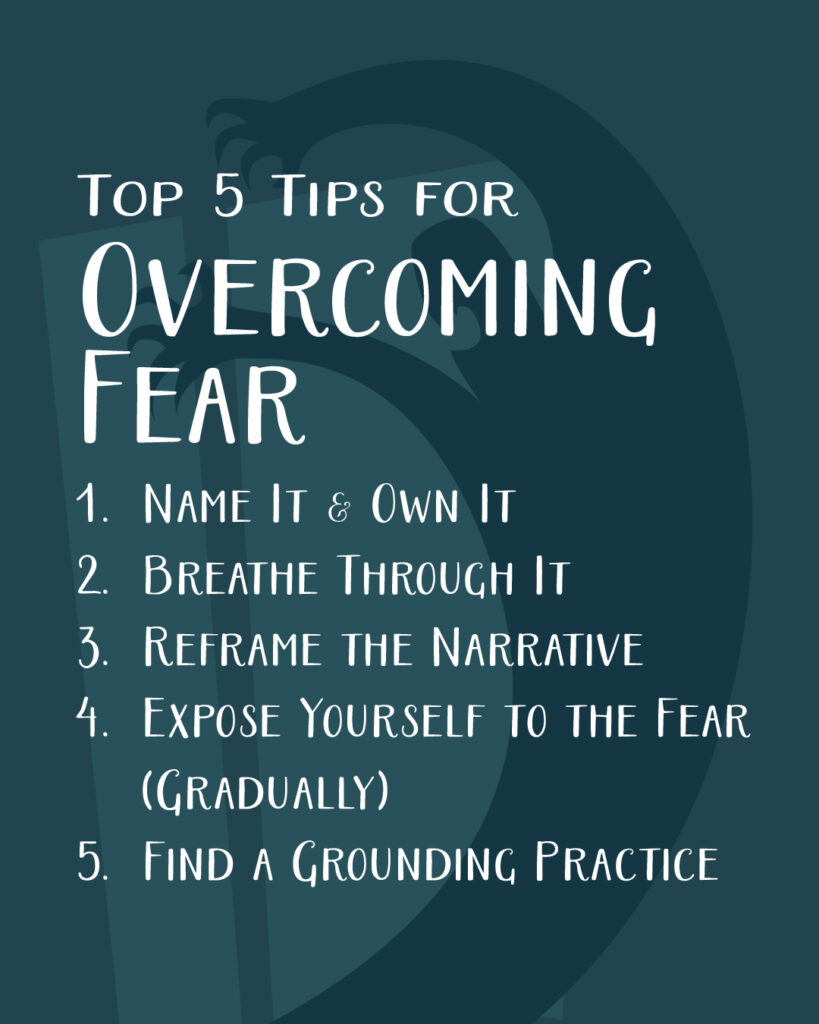
Fear may feel like an immovable force, but it doesn’t have to be. The truth is, fear is fluid—it rises and falls, and it can be confronted and reshaped. Overcoming fear isn’t about eliminating it entirely; it’s about learning how to move through it with courage and intention. Below are some of our favorite ways to shift your relationship with fear and reclaim your power.
1. Name It & Own It
Fear thrives in the shadows. When we name it—out loud or in writing—we strip it of some of its power. Instead of saying, “I’m just anxious,” try, “I’m afraid of failing at this project because I doubt my abilities.” Acknowledgment is the first step toward reclaiming control.
2. Breathe Through It
Fear is a physiological event, and one of the quickest ways to interrupt it is through breath. Slow, deep breathing signals to the brain that the threat is not as immediate as it seems. Try the 4-7-8 technique: inhale for four seconds, hold for seven, and exhale for eight.
3. Reframe the Narrative
Instead of seeing fear as a stop sign, see it as a green light for growth. Fear only shows up when something matters—when we are at the edge of expansion. Ask yourself: “What is this fear trying to teach me?” Do your best to challenge your fear!
4. Expose Yourself to the Fear (Gradually)
Avoidance feeds fear. The more we run from it, the stronger it grows. Instead, take small steps toward what scares you. Afraid of public speaking? Start by speaking in front of a friend or small group. Fear diminishes when we lean into it rather than run from it.
5. Find a Grounding Practice
Meditation, journaling, movement, and creative expression can all help process fear in healthy ways. A regular practice that connects you to your body and breath helps build resilience and keeps fear from becoming overwhelming.
Treatment for Fear in Orange County, California
Fear doesn’t have to control your life. At Barn Life Recovery, our holistic approach blends therapy, mindfulness, and community support to help you face your fears, build resilience, and step into a more empowered version of yourself. Whether you’re struggling with anxiety, past trauma, or simply feeling stuck, we’re here to walk this path with you. Contact us today and start your journey toward a life that’s no longer ruled by fear!